Search This Blog

Showing posts with label Albert. Show all posts

Tuesday, 10 July 2012

29. Retirement

Nell (right) and friend at Heathcote house
In 1956 Bert retired and he and Nell drew the Australian aged pension. They had been planning and saving. Just before his retirement, with some help from Albert, they bought a house at Heathcote, then a small town on the rail line beyond Sutherland, south of Sydney, now a Sydney suburb.

There was a shed for Bert and the house was comfortable. It was not connected to the mains sewer and had an outside toilet, with a weekly collection service by the local council.

Bert's Holden looked like this
They established a garden and grew their own vegetables. Bert also bought a new car prior to retirement  - a green Holden.
They were closer to Fred and Clare's than they had been in Botany and it was an easy drive to visit Albert at Banksia. They could go for their drives to the bush without going through the Sydney traffic - now becoming busier and slower. None of Bert's children had cars or drove in his lifetime.


Fred, Clare & Nell on excursion
Sylvia, Len and their children visited on Sundays about once a month, catching the train from Sydney's Central Station to Sutherland, then changing to the small motor rail that went down the coast to Waterfall.


Irene with her father
Beryl, Bert and Nell at Irene's wedding.
When Bert's eldest grandchild, Irene, married Ray Baker in 1961, Bert enjoyed attending the wedding and looked forward to great-grandchildren.


Albert's photography business was successful, and Albert enjoyed his work. Irene had worked colouring photos in the business but wanted to phase out as she had children and as colour photography took over.
Syd and Grace took advantage of the expansion of Sydney's power stations in the Lake Macquarie area, north of Sydney to buy land and build a house at Toukely, north of Sydney. With the opening of the Wangi and Munmorah Power Stations in 1958, Syd was able to transfer from the Bunnerong Power Station on Botany Bay  where he had worked since the war.

Sylvia had taken a part-time job at Qantas to help out with uniforms and books when her elder child began high school in 1959. She took advantage of staff travel concessions to visit New Zealand in 1961 and catch up with both Les and Doll and their families.

Nell, Clare, Bert, Doll and Fred in Australia 1962


In 1962, Doll made the trip by plane from New Zealand to Australia to visit her brothers, Bert and Fred. It was a very happy reunion. Doll met all the family and stayed with Bert and Nell.

It was to be their last time together, and the last photo taken of both Bert and Doll.

Saturday, 30 June 2012

26. Into the 1950s.

By the 1950s Bert's life was settled and more comfortable than it had been since the years before his father died. He was wiry and active. He had given up smoking. The only beer he indulged in was Horehound Beer, a non-alcoholic drink purchased every now and then from a stall in Sydney's Central Railway. His children said this was all Nell would allow him, but Bert was a follower of health foods, and Horehound had a long history of association with the English mineral water business that Bert's family had been a part of.

Bert also had raisin sandwiches, banana sandwiches and bread and honey most days - certainly his own choice, not shared by anyone else in the household. He had a 'fizzy drink' each day after his evening meal - Alkasetzer - to aid his digestion. On weekdays Bert drove to work early. On his way home he often stopped to see Grace, still living in Mascot, and estranged from her mother.

Nell had the evening meal on the table at 5.00pm. If Bert was late, his meal was in the oven of the coal-fired stove. Bert was mostly home before 4.00pm, working in his shed. Just before 5 he would come into the house and wash-up in the large bathroom, scrubbing his hands with solvol, lathering again and again, pushing the lather down each hand until it was clean.

After the evening meal, he and Nell retired to the sitting room, in front of the radio. Nothing came between Bert and the radio serial, When a girl marries. 


There were celebrations with the Harris's - their friends from the Orontes - or with Fred and Clare - around the pianola.

Bert had a permanent booking on Saturday nights at the Botany Empire Cinema - upstairs, first row on the right, a double seat. He and Nell rarely missed.

On weekends there were still the drives into the bush. Sometimes Nell would spot a plant in the scrub and call for Bert to stop. She would dash into the bush, dig up or snap off enough to try growing it in her bush-house. Bert still grew vegetables and flowers for home consumption and Nell kept chickens.

Bert paid for Sylvia's two children to be born in the Pacific Private Hospital in Brighton-le-Sands, perhaps hoping to prevent his daughter having the difficulties that had plagued Nell's pregnancies.


Bert badly wanted a grandson. When Sylvia's first baby, born in 1947 was a girl, Bert refused to look at her for a week, and called her 'Sonny Jim' for 16 months until Sylvia obliged with a boy.


He was always kind to his granddaughters - but in his world a boy was what counted.

He had no time for women drivers, women in public life, or education for women.


Albert's photography business thrived in the 1950s, leading to Albert becoming the photographer for Woolworths in Sydney, near the Town Hall. He had a small studio there were he took photos, which he developed in a darkroom near Central Railway. Irene learned to colour the photos and Beryl served as receptionist.


Grace and Brenda Grace

Grace and Sid had a daughter, Grace Brenda, born in 1949. Sid worked at the Bunnerong Power Station, near the Botany Bay heads.
Bunnerong Powerhouse from Banksmeadow School 1940


In 1953 Sylvia and Len bought their own home in Livingstone Avenue Botany, the same street that the family had lived in when Bert worked on the Banksmeadow retaining wall. Bert and Nell drove over to visit on most Sundays, sometimes staying, sometimes taking everyone on the routine drive to the bush.


In the school holidays Nell and Bert would take Sylvia and her children on day trips to places like the Captain Cook landing place at Kurnell.

On the way home, Bert always stopped to buy ice-cream for everyone - vanilla between wafer biscuits.

Thursday, 28 June 2012

25. Bert in WWII

Bert's life during the Second World War could hardly have been more different than his life during WWI. He was now a civilian, on the other side of the world, with a grown family. By 1940 his two elder children were married and independent. Sylvia still lived at home, but was working and contributing board.

Bert with his dog, Teddy, 1940s
Hard work and frugality had resulted in a modicum of comfort for Bert and Nell. Their home was comfortable.  In their sitting room  they had a large mantle radio that Bert liked to listen to in the evenings, and they had a pianola with a collection of pianola rolls that became the centre piece of evenings with friends.

The local factories were short of labour as young men enlisted and went to war. Bert's son, although he did not enlist, was not interested in the nursery business. Bert was too much a product of the Victorian era to even consider that his daughters might be business partners in the nursery, even though both of them were interested in plants and cultivation. Women, in his world, raised children, kept house and helped out. They weren't partners, and they weren't the future of a business.

Men working at Textile Dyers and Bleachers 1940
Bert responded to the call for older men to help keep the factories working, closed his nursery, and went to work for Textile Dyers and Bleachers in Mentmore Avenue, Rosebery. He worked there until 1956. The company eventually specialised in a form of winter cotton, similar to Viyella. Workers could bring home the ends of the rolls of dyed fabric that were cut off before the rolls left the factory. Sylvia and Grace turned these into clothes and Nell hooked strip rugs for every room in the house.

Bert exchanged his nursery truck for a car. When he wasn't at work, or driving the car, he was cleaning, adjusting or tinkering with it.

Grace, Syd & Sylvia WWII
Grace's husband, Sid Molloy, had joined the Australian Navy and was at sea for much of the War. Sylvia frequently stayed with Grace while Syd was away.

In her waitressing job in the city, Sylvia met many servicemen on leave and went out with some of them. If she liked the look of the English servicemen, and they were in Sydney over a weekend, she would invite two or three of them home on a Sunday. Bert would take the group for a drive to La Perouse, Kurnell, Cronulla, Jannali and accessible 'bush'. Nell would kill and cook one of her chickens, and the evening would be spent singing around the pianola. It was a touch of 'over home' giving them news of places and developments in England.


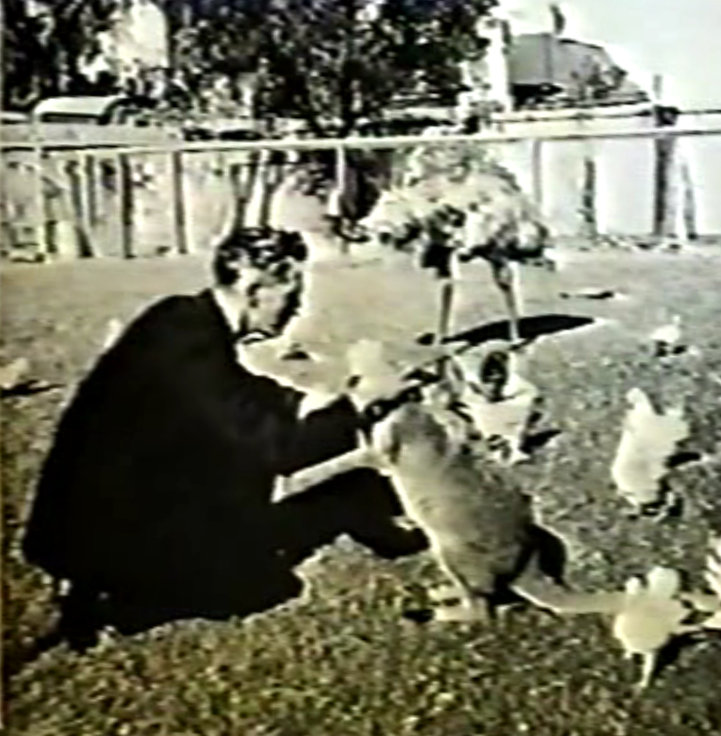
                                                    In 1940 Bert became a grandfather with the birth of Albert's daughter Irene. Bert liked children, and enjoyed taking Irene and her parents on excursions in his car, to places like the small sanctuary at Doll's Point where you could pat a kangaroo.

Letter writing rarely made it to the top of Bert's priority list. His mother wrote and asked for news. As time went by, Grace took on the task of writing to the grandmother after whom she was named.

In 1945 Sylvia met Len Haynes, a young British sailor in Sydney while his ship, the Formidable,  was repaired after kamikazi attack. They corresponded when the Formidable returned to sea, and when the War ended, Len chose to be demobilised in Sydney.

Sylvia was 20 when she and Len married in January 1946. Bert grumbled, but gave his permission when Sylvia said she would wait until she was 21 and marry him anyway.

The couple went to Lake Burrill for two weeks honeymoon, then moved into the front room of Bert and Nell's house at 98 Banksia St. Botany. The post-war housing shortage in Sydney meant they lived in this front room for the first seven years of their marriage.


At the end of the war, Albert persuaded Frank Hurley, the war photographer, to take him on as an unofficial apprentice in his photography studio in Sydney. Albert went to the studio after work each day and worked with Hurley, developing and printing photographs, learning the trade. Albert then began to photograph weddings, to do some street photography and within a few years, established his own business as a photographer. It was not what his father had envisaged, but it did display the entrepreneurial spirit of Bert's father and grandfather, and of Bert himself in his nursery business.

Friday, 22 June 2012

23. Adult and Adolescent Children in the 1930s

Albert Banksia St
Albert and Grace, Bert's two older children, came to Australia in early adolescence. The first years were hard, as the family hung on through the worst of the Great Depression, adjusting to new climate, new ways - similar poverty in new surroundings.

The experience was very different for them than for Sylvia, who began school in Australia. Albert and Grace had left school behind and needed to find their way to financial and adult independence.

Albert found work at Bailey's tannery and quickly made friends. Albert and Grace joined the Methodist Youth group in Botany and made more friends. As they both got a little money in their pockets they wanted a life other outside the work routines - and expectations - of their parents.

Albert fishing
Albert at Cronulla
Albert


Albert and his friends went fishing - staying all weekend in makeshift huts near Cronulla. Albert eventually got a boat, and sold some of the fish he caught.
With his friend Tommy Meahan, Albert took up boxing and practised at home in Banksia St - buying boxing gloves to alleviate the fear and abhorrence that Bert and Nell expressed at the damage they did to each other.

Albert on left, with mates on Manly ferry


One of Albert's favourite pastimes was taking the ferry to Manly with his mates on Sunday - dressed to kill in their striped blazers - going back and forth on the same ticket, listening to the bands that played on the ferry, and flirting with girls.
It was not a life with which Bert had much empathy.


For a while Grace helped out and home, then went into service. She worked for a while at Coghlan's Nursery.


Grace


As things improved economically, she got a job at Johnson and Johnson. She rode her bike there - never mastering, according to her sister, the back-pedal brake, and stopping when she got to work by running into the wall.


Grace, 2nd from left

Grace liked to dress up and go out. She also loved the rare occasions when she could visit the country, or places of interest.


Albert and Beryl's wedding party. Grace in pink


In 1938 Albert married Beryl Thompson, one of Grace's friends from the Methodist Youth Fellowship.

Their daughter, and only child, Irene, was born in 1942.


Grace and Sid wedding

In 1940 Grace married Sidney Molloy, one of Albert's friends from Bailey's. Sid had by then joined up and was serving as a stoker on HMAS Australia.

Sid was a Mascot boy, and the couple settled  in Mascot.

Tuesday, 22 May 2012

17. Bulphin, Essex..


St Mary's Bulphin in 1966.

We don't know how long it took for Bert to find work, but by 1922 he and Nell were living in a Rectory Cottage at Bulphin, in Essex, where they were acting as caretakers of the church and schools. The Reverend Theodore Alphonse Teitelbaum had been rector of St Mary's Bulphin (pronounced "Bullven") since 1903 and appears to have died there in 1946. The population of Bulphin in 1921 was 448.

Bulphin Village 1966
James Pinkerton, the nurseryman who employed Bert in 1912, was the largest landowner in Bulphin and may have been the connection that found him the job. The township consisted mostly of farms, had three nurseries, a blacksmith, a horse-slaughterer, an inn, a baker, a grocer, a builder and a monumental mason.


Bulphin School c. 1922. Albert Ray third from left in 2nd row
Bulphan Church of England Voluntary Controlled Primary School still operates, with an enrolment of 100 students in 2012. In 1925 the enrolment of the Public Primary School (managed by Bulphin Church) was 78 and the school mistress was Miss Annie Ward. Bulphin Parish also operated St John's Preparatory School (listed in the 1921 UK City and County Directories) of which the Rev. Teitelbaum was the master. It appears that Bert and Nell's prime responsibilities were caretaking for the two schools.


It was not a well-paid job, but a cottage went with it. The rectory itself was on 15 acres of Glebe land and Bert and Nell could keep a few chickens and grow vegetables. Albert and Grace attended Bulphin School.

Albert in front of choirmaster.
 They also attended St Mary's Church, as Albert told it many years later, without their parents, four times on Sunday - once for Sunday School and three times for church services. Albert was in the choir.
Grace at Bulphin Church


Albert at Bulphin Church.


In September 1922, Nell gave birth to a son, Ronald. When he was six months old, Nell took him at Grays Hospital to be circumcised - what should have been a routine and quick proceedure. Things, however, did not go well. The baby developed an infection and had to remain in hospital for several days.The Rev. Teitelbaum was on holiday in Bognor and sent a postcard. Nell cycled the six miles to the hospital each day to breastfeed him. On the sixth day, when she arrived, she was told he had died overnight of pneumonia. It was a shocking and devastating experience - without warning and out of her control. It left Nell, and other family members, scarred.


In September 1924, Clement Bailhache's father, Justice Sir Clement Meacher Bailhache, died and Bert wrote a letter of condolence to his old Captain. Typically, he did not mention his own situation. It is unlikely Bailhache knew Bert had lost his job at Hoffman's, nor did he know of Nell's miscarriages and the death of Ronald. Bailhache, Bert knew, would have enough troubles of his own. Bailhache's reply to Bert concludes: "We are all well but I cannot say I find fruit growing a very paying proposition in these days."

In 1925 Nell successfully gave birth to a girl, Sylvia Joyce. Bert chose her name from a phone book entry. She spent much of her early childhood with Bert - partly because it was the first child he had seen grow up, and partly because Nell was depressed.


The Teitelbaums were good to Nell and Bert, and and in later years were remembered with affection by Albert and Grace as well. It was, however, a life barely above the poverty line. By 1927 Bert was applying for other jobs and Teitelbaum helped with a reference.
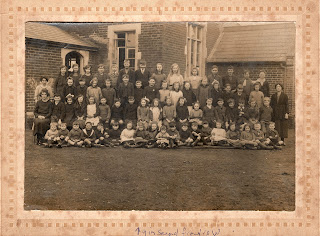


Bulphin School older children c 1927. Grace 9th from left in 2nd row,
Albert 3rd child from right in third row.


Albert & Grace Bulphin School


Grace suffered from rheumatic fever and also missed quite a lot of school.


Albert had reached the end of his schooling. He later recalled that he spent a lot of time staying with his grandmother, Emily Ray, helping in her nursery, often missing school, and no doubt kept out of the way of Nell's pregnancies and depression. He found the work hard and debilitating.

Bert's cigarette case
Albert got his first camera, a Brownie Box, when he was 12 - from saving cigarette cards (presumably from his father and uncles).
Bert and Nell's council house, Bulphin 1927-9

                     
He took a photo of the Council house the family moved into around 1927.


While they got by, neither Bert nor Nell could see a future for themselves or for their children where they were.  The economic situation was worsening.


Bert's two youngest brothers offered them a way out.